A professional reflection from our CEO, Daisy Long.
World Social Work Day 2026 arrives at a time when societies everywhere feel stretched, fragmented, or fatigued.
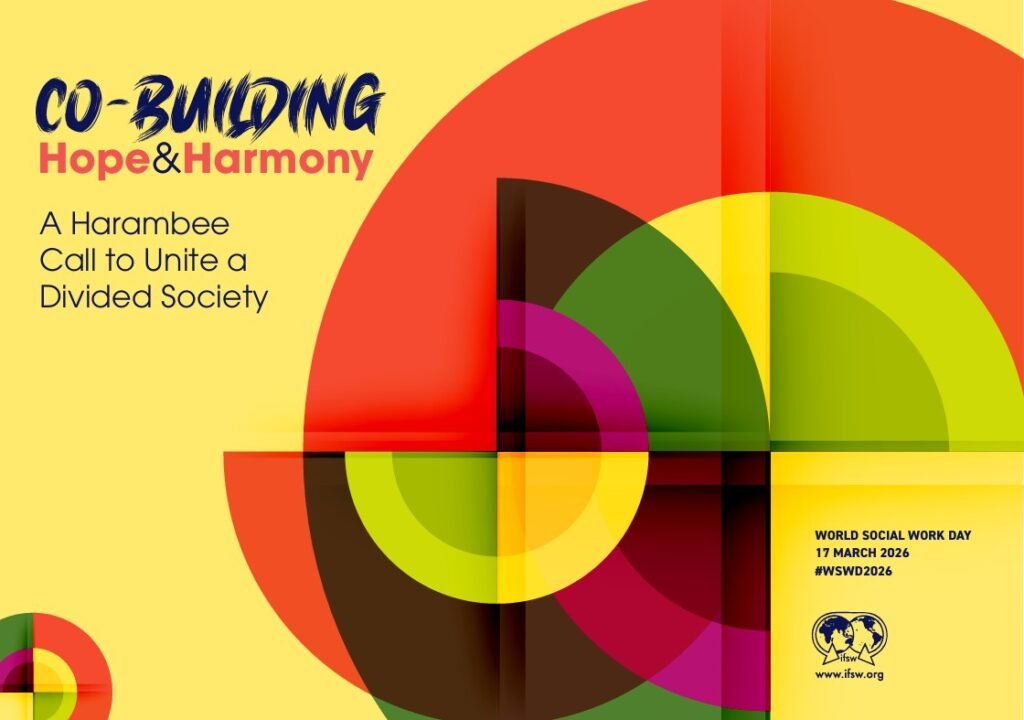
The global theme – “Co‑Building Hope and Harmony: A Harambee Call to Unite a Divided Society” – invites us to look honestly at the world around us and at the systems we work within.
Harambee, meaning pulling together or all for one, is rooted in an African philosophy of unity, mutual support and shared responsibility.
For me, as a late‑diagnosed ADHD woman and a proud neurodiversity advocate within the profession, this theme lands deeply. It speaks not only to the communities we work alongside, but also to the profession itself – a profession still learning how to truly include its neurodivergent workforce.
Social Work Is Strongest When We Show Up As Ourselves
In social work, we encourage people to bring their whole selves, yet so many neurodivergent professionals feel pressure to mask or compress parts of who they are just to survive the working day.
The 2026 theme stresses that rebuilding trust and social cohesion requires authentic connection, collaboration and participation. Those principles apply internally too.
If we cannot create conditions where neurodivergent social workers thrive, how can we expect to model hope and harmony externally?
My own late diagnosis reshaped my understanding of “professionalism.” I realised how many years I interpreted feedback through the wrong lens, that I was “too much”, “too fast”, “too volatile”, “too intense.” Now I understand those traits as part of my wiring, not deficits. They are the same traits that have enabled 30 years of practice, creativity, innovation and relentless curiosity.
Harambee reminds us that we pull together best when everyone pulls as themselves, not as a diluted version of who they are expected to be.
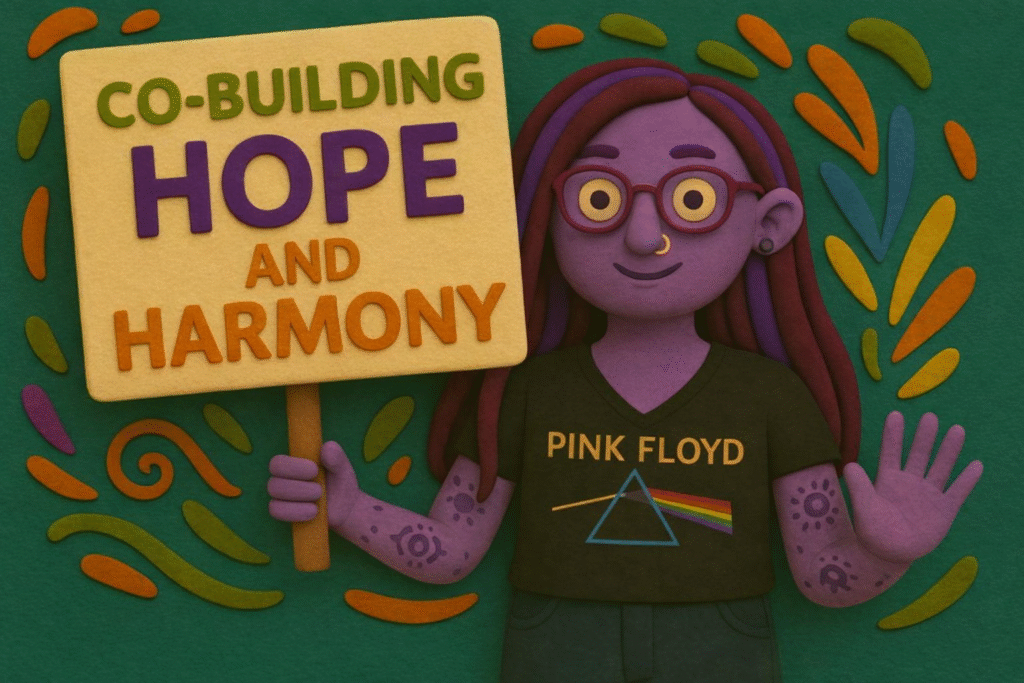
Neurodiversity Is a Collective Strength in a Fractured World
This year’s global focus acknowledges that we are working in a world shaped by conflict, inequality, displacement, trauma and ecological crisis.
These are complex, nonlinear problems, and neurodivergent minds are often uniquely equipped to think laterally, spot patterns, question norms and innovate.
When we talk about “co‑building hope,” we are really talking about co‑building:
- new ways of thinking
- new ways of relating
- new ways of understanding risk, trauma and resilience
- new ways of designing services and systems
Neurodivergent practitioners contribute invaluable insight to all of this. We see things others may not. We notice the detail. We sense the emotional undercurrents. We hold multiple layers at once. These are powerful practice assets, not anomalies to be ironed out.
Harmony Requires Justice, Not Just “Playing Nice”
One of the most important clarifications in this year’s theme is that harmony is not the absence of conflict; it is the presence of justice, participation and trust.
That includes justice within our own profession. We can acknowledge, without over‑claiming, that many neurodivergent social workers describe pressures that make the working environment harder than it needs to be.
We can speak about patterns that are repeatedly raised in research, supervision spaces and lived‑experience testimony: the exhaustion that comes from constant masking, the strain created when systems value uniformity over creativity, and the quiet compromises people make when they don’t feel safe to name their access needs.
We need to talk about these realities, even if we cannot claim them universally, because they shape the conditions in which hope, unity and genuine inclusion can either grow, or be eroded.
The UN’s 2026 WSWD focus emphasises rebuilding trust, strengthening social cohesion and creating participatory spaces, particularly in marginalised communities.
Those commitments must extend to the workforce too. A neuroinclusive profession is not a “nice to have”, it is essential if we are serious about bold, relational, rights‑based practice.
A Call to Action
As both a Social Worker and CEO of DCC‑i, my commitment this year is grounded in the spirit of Harambee: to pull together, intentionally, in the direction of inclusion and authenticity.
For us this means:
- designing training that honours different thinking styles
- embedding ND‑affirming practice into CPD frameworks
- modelling openness about my own neurodivergence in leadership spaces
- creating learning environments where people can be curious, not cautious
- championing systems that understand difference as a resource, not a risk
It also means encouraging neurodivergent social workers, at every career stage, to see themselves not as outliers, but as powerful contributors to the collective future of the profession.
Hope Is Built in Relationship. Harmony Is Built in Community.
Harambee teaches us that no single actor can address today’s challenges alone.
That is true globally and true within social work.
On this World Social Work Day, my message to the profession is simple:
We don’t co‑build hope by asking people to fit in. We co‑build hope by making room for people to fully belong.
And to every neurodivergent practitioner:
your brain, your pace, your wiring and your way of experiencing the world are very much needed in a profession that depends on creativity, courage, curiosity and compassion.
Let’s keep pulling together.
Let’s keep reimagining what’s possible.
Let’s strive for the harmony that comes from authenticity, not assimilation.
Happy World Social Work Day 2026 everyone!
Explore More:
Explore the Full TECWorks × DCC-i Resource LibraryPractical tools, guidance, and lived-experience insight co-created by TECWorks and DCC-i.